


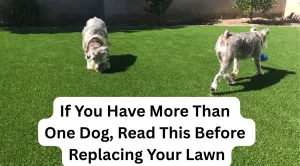
Lawns that struggle with one dog often fail completely with two or more. Homeowners in multi-dog households tend to deal with muddy areas, dead patches, lingering odors, and constant cleanup far more quickly than they expect.
Before replacing your lawn — whether with pet turf or another solution — it’s important to understand what actually changes when multiple dogs share the same outdoor space.
Many homeowners don’t realize that yards with multiple dogs place very different demands on outdoor surfaces. For a complete overview of how pet turf for dogs is designed to handle frequent use — including drainage, odor control, and safety — see our full homeowner’s guide.
Wear and Tear Happens Faster Than You Think
With more than one dog, lawns wear down quickly. Dogs tend to use the same paths, corners, and bathroom areas repeatedly, which leads to bare spots and compacted soil.
Once grass breaks down in these areas, recovery becomes difficult — especially in shaded yards or during wet seasons.
Odor Becomes a Bigger Concern
In multi-dog households, odor issues usually show up sooner.
The key factor isn’t how often dogs use the yard — it’s how well the surface handles moisture. When urine can’t drain efficiently, smells linger and bacteria build up.
In pet-specific turf systems, urine drains through the turf backing instead of sitting on the surface. This kind of fast drainage plays a major role in keeping pet turf cleaner and more manageable over time.
Maintenance Expectations Need to Be Realistic
Artificial grass can significantly reduce maintenance, but homeowners with multiple dogs should still expect some routine care.
Most multi-dog households:
-
Rinse the turf more frequently
-
Use pet-safe cleaners as needed
-
Pay closer attention to high-use areas
This is still far less work than repairing grass, reseeding, and dealing with mud — but it’s important to set realistic expectations.
Not All Turf Is Designed for Multi-Dog Use
One of the biggest mistakes homeowners make is choosing turf that isn’t designed for pets.
Pet turf systems differ from basic artificial grass in:
-
Drainage performance
-
Backing design
-
Installation requirements
For homes with multiple dogs, these differences matter even more.
Final Thought
If you have more than one dog, replacing your lawn is less about aesthetics and more about durability, cleanliness, and long-term usability. Understanding how different surfaces perform under frequent pet use helps homeowners choose a solution that actually works for their household.