


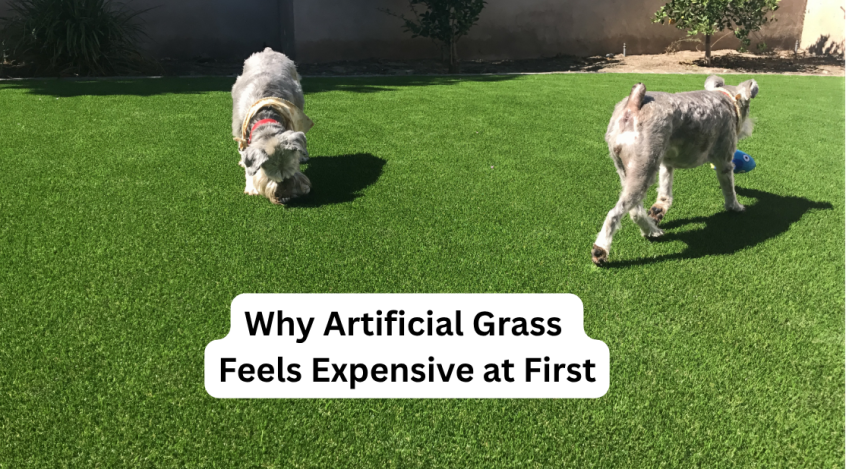
For many homeowners, the first reaction to artificial grass pricing is simple: “I didn’t expect it to cost that much.”
That reaction is common — especially when comparing artificial grass to the upfront cost of natural sod or traditional landscaping.
But artificial grass is often evaluated differently than other outdoor purchases because most of the cost happens at the beginning rather than over time.
Understanding what contributes to that upfront investment helps explain why artificial grass can initially feel expensive.
Most of the Cost Happens Upfront
With natural grass, costs are spread out gradually through:
- Water usage
- Lawn care
- Fertilizers and treatments
- Ongoing maintenance
- Repairs and reseeding
Artificial grass works differently.
Much of the investment happens at installation:
- Ground preparation
- Base construction
- Drainage setup
- Turf materials
- Installation labor
Because those costs are concentrated at the start, the project can feel more significant initially.
Artificial Grass Is More Similar to Hardscaping Than Landscaping
One reason homeowners are surprised by pricing is because they often compare artificial grass to sod.
But in reality, artificial grass functions more like: 
- Pavers
- Decking
- Patios
- Other long-term outdoor surfaces
It’s designed as a built system intended to perform consistently over time.
That includes:
- Structural preparation
- Drainage considerations
- Long-term durability
When viewed as a long-term surface rather than a temporary lawn replacement, the pricing often makes more sense.
Installation Plays a Big Role in Cost
A large portion of artificial grass pricing comes from what happens underneath the surface.
Proper installation includes:
- Excavation and removal
- Base preparation
- Compaction
- Drainage design
- Seam and edge finishing
These steps are what help the system remain stable and functional over time.
This is also why two quotes that look similar on paper can vary significantly in price.
Higher-Quality Materials Usually Cost More
Artificial grass products vary widely in:
- Durability
- Drainage capability
- Fiber quality
- Intended use
Products designed for:
- Pets
- High traffic
- Residential longevity
Typically involve more advanced construction and materials.
For many homeowners, the difference becomes more noticeable over time rather than immediately after installation.
DIY Can Reduce Upfront Cost — But Preparation Still Matters
Some homeowners choose a DIY approach to reduce installation expenses.
This can lower upfront cost, especially by reducing labor. However, the same foundational elements still matter:
- Base preparation
- Drainage
- Compaction
- Material selection
Whether professionally installed or DIY, long-term performance usually depends on how thoroughly those steps are handled.
The Long-Term Perspective Changes the Conversation
Many homeowners initially focus on: “How much does this cost today?”
But over time, the conversation often shifts toward:
- Reduced maintenance
- Consistent appearance
- Less ongoing lawn work
- Improved usability
Artificial grass isn’t the lowest-cost upfront option — but for some homeowners, the long-term convenience and consistency become part of the value.
Why Some Homeowners Still Decide It’s Worth It
For households with: 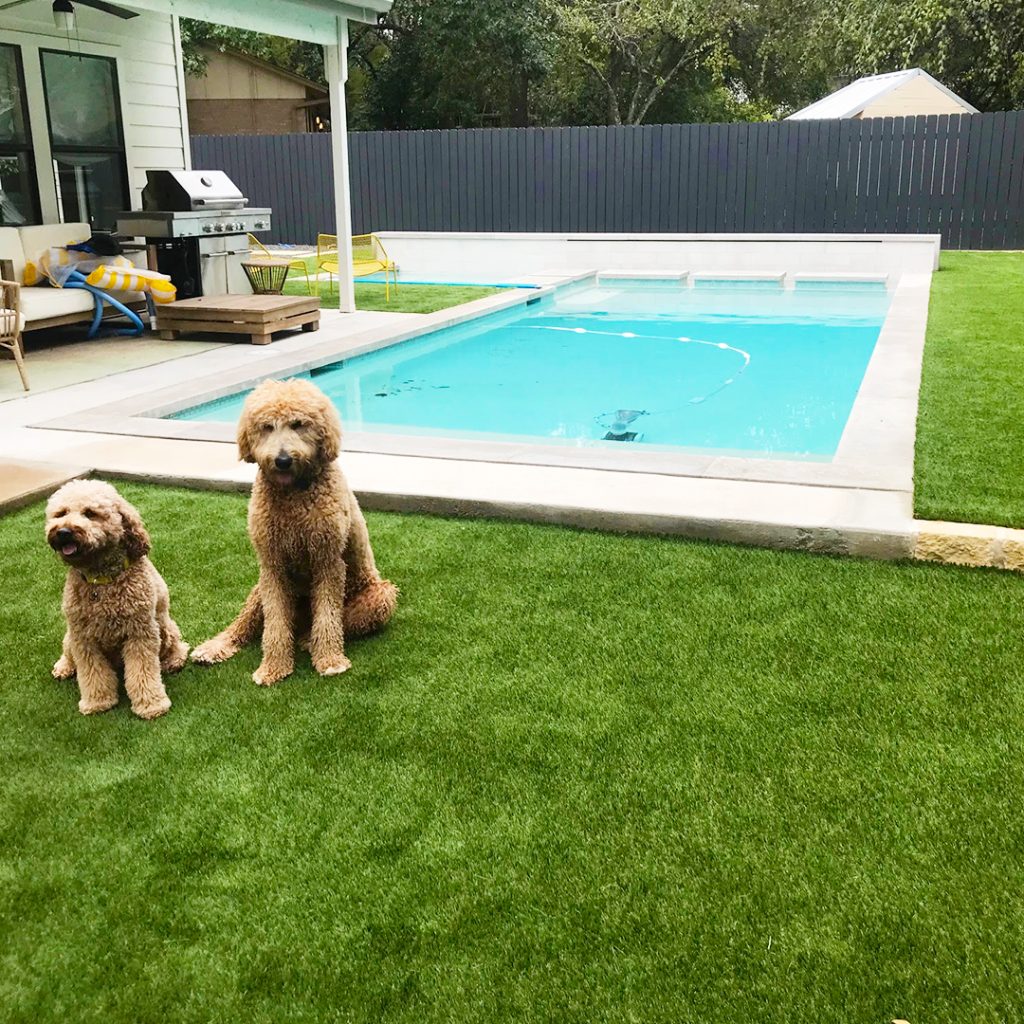
- Dogs
- Kids
- High-use yards
- Ongoing lawn frustrations
Artificial grass can solve problems that continue year after year with natural grass.
That doesn’t automatically make it the right choice for everyone — but it helps explain why many homeowners evaluate the investment differently after understanding the full picture.
A Better Way to Compare Costs
Instead of asking: “Why is artificial grass expensive?”
It’s often more helpful to ask: “What am I actually paying for?”
Once homeowners understand:
- Installation requirements
- Drainage systems
- Material quality
- Long-term usability
The pricing tends to feel much more understandable.
If you’re comparing different options, our guide to how to choose the right artificial grass breaks down the factors that affect both performance and overall value.
Final Thought
Artificial grass can feel expensive at first because most of the investment happens upfront.
But the cost reflects more than just the turf itself — it includes the full system designed to support long-term performance, durability, and usability.
Understanding that bigger picture helps homeowners make decisions based on long-term expectations rather than just initial price alone.