


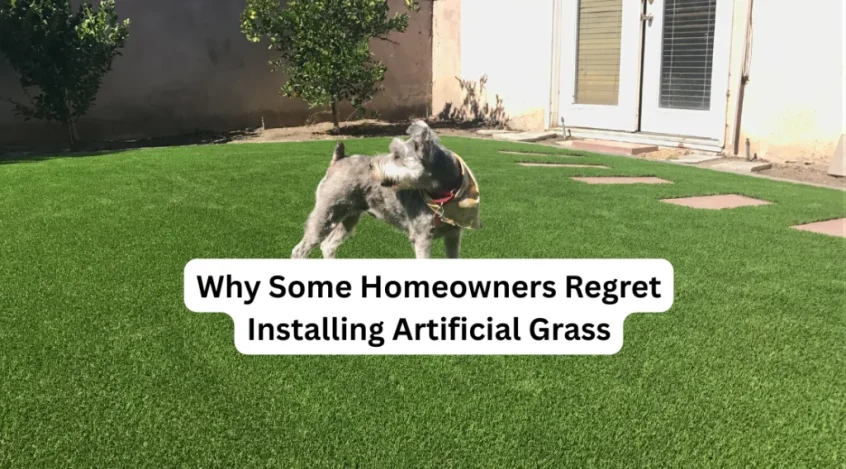
Artificial grass is often promoted as a long-term solution for homeowners who want a cleaner, lower-maintenance yard. For many families, it delivers exactly that. But occasionally you’ll hear someone say they regret installing artificial grass.
When that happens, the reason is rarely the material itself. More often, regret comes from unrealistic expectations, installation shortcuts, or choosing a product that wasn’t the right fit for the yard.
Understanding where regret comes from helps homeowners make better decisions before installing artificial turf.
Many of the complaints homeowners share about artificial turf are preventable once you understand the most common installation and performance issues. For a full breakdown, see our guide to common problems with artificial grass and how to avoid them.
Expecting Artificial Grass to Be Maintenance-Free
One of the biggest reasons homeowners feel disappointed with artificial grass is simple: they expected zero maintenance.
Artificial grass is low-maintenance, but not maintenance-free. Homeowners should still plan to:
-
Rinse occasionally
-
Remove leaves and debris
-
Brush high-traffic areas
-
Address pet areas when needed
When someone expects a completely hands-off yard, even small upkeep tasks can feel frustrating.

Poor Installation
Many artificial grass problems have little to do with the turf itself and everything to do with installation quality.
Common installation mistakes include:
-
Inadequate base preparation
-
Poor drainage planning
-
Improper seam work
-
Weak edge restraints
These issues can lead to uneven surfaces, ripples, drainage problems, or premature wear.
When installation shortcuts are taken, homeowners may blame the turf — even though the underlying issue is structural.
Choosing the Wrong Turf for the Space
Artificial grass products vary widely depending on how they’re designed to be used.
Some turf systems are built for:
-
Heavy pet traffic
-
Play areas for kids
-
Decorative landscaping
-
High-traffic gathering spaces
If a turf product isn’t matched to how the yard will actually be used, performance issues can follow.
Misunderstanding Comfort and Feel
Another reason some homeowners feel regret is that artificial grass does not feel exactly like natural grass.
Modern residential turf is designed to look realistic and remain consistent year-round, but it doesn’t grow, soften, or change seasonally the way natural grass does.
For some homeowners, that difference takes adjustment.
Drainage and Pet Odor Concerns
In households with pets, drainage becomes especially important. If the base layer beneath the turf isn’t prepared correctly, moisture and odor issues can develop. 
Most odor complaints are related to drainage design or cleaning routines rather than the turf material itself.
Proper installation and occasional rinsing typically prevent these issues.
Artificial Grass Isn’t Ideal for Every Yard
Artificial grass works well in many residential environments, but it isn’t the perfect solution for every property.
Yards that may require additional planning include:
-
Areas with severe drainage problems
-
Extremely uneven terrain
-
Locations with strict HOA landscape requirements
When homeowners evaluate whether artificial grass truly fits their yard and lifestyle, regret becomes much less likely.
What Regret Usually Means
When homeowners say they regret installing artificial grass, they usually mean one of three things:
-
They expected zero maintenance
-
The installation wasn’t done properly
-
The turf wasn’t matched to how the yard would be used
Very rarely is the complaint simply that artificial grass “doesn’t work.”
Final Thought
Artificial grass can be a durable, practical solution for many homeowners — especially when installation, drainage, and product selection are handled carefully.
Understanding common pitfalls before installation is the best way to ensure the investment performs the way homeowners expect.