


Artificial grass is often chosen as a long-term solution for homeowners looking to reduce maintenance and keep their yard looking consistent year-round.
But how long does artificial grass actually last?
The answer depends on several factors — including product quality, installation, usage, and maintenance. While many residential systems are designed to last years, early wear can happen when certain conditions aren’t met.
Understanding what affects lifespan helps homeowners protect their investment. Longevity is closely tied to installation quality, drainage, and how the turf is used over time. For a full breakdown of common issues that can affect performance, see our guide to common problems with artificial grass and how to avoid them.
How Long Does Artificial Grass Typically Last?
High-quality residential artificial grass is designed to last many years under normal use.
However, lifespan varies depending on:
- Foot traffic levels
- Pet use
- Climate and sun exposure
- Installation quality
- Maintenance habits
A well-installed system that’s matched to the yard’s use will generally perform much longer than one that isn’t.
What Causes Artificial Grass to Wear Out Early?
When artificial grass fails prematurely, it’s usually not due to a single issue. Instead, it’s a combination of factors that affect the system over time.
Poor Installation
Installation plays one of the biggest roles in how long artificial grass lasts.
If the base isn’t properly:
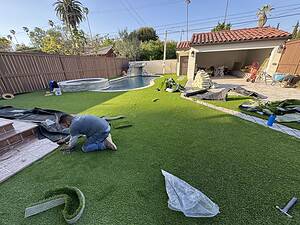
A worker installs Smart Turf® artificial grass in a backyard, highlighting proper installation to avoid common problems.
- Prepared
- Compacted
- Designed for drainage
The turf can shift, wear unevenly, or degrade faster.
This is why long-term performance starts below the surface.
Choosing the Wrong Turf for the Application
Not all artificial grass is designed for the same use.
Using decorative turf in a high-traffic or pet-heavy yard can lead to:
- Flattening
- Faster wear
- Reduced appearance over time
Matching the turf to how the space will be used is essential for durability.
High Traffic Without Proper Support
Areas that see consistent use — such as walkways, play zones, or pet areas — naturally experience more wear.
Without:
- Proper infill
- Reinforced base preparation
- Occasional maintenance
These areas may show signs of wear sooner than expected.
Poor Drainage
Drainage affects more than just cleanliness — it also impacts longevity.
If water doesn’t move efficiently through the system, it can:
- Soften the base
- Cause shifting
- Increase wear over time
Proper drainage helps maintain structural integrity as well as usability.
(Optional second link)
You can link to:
Why Artificial Grass Smells (and How to Prevent It)
to reinforce the connection between drainage and performance.
Lack of Maintenance
Artificial grass is low-maintenance, but not maintenance-free. 
Without basic care, issues can develop over time, such as:
- Debris buildup
- Flattened fibers
- Reduced drainage performance
(Optional second link alternative)
You may also reference:
Maintaining Your Artificial Grass: It’s Low Maintenance, Not No Maintenance
Sun Exposure and Environmental Conditions
Like most outdoor materials, artificial grass is exposed to weather and sunlight.
Extended exposure to:
- Direct sun
- Heat
- Environmental debris
Can gradually affect the appearance and performance of the turf over time.
Modern residential turf is designed to handle these conditions, but environment still plays a role.
Signs Artificial Grass May Be Wearing Out
Homeowners may notice:
- Flattened or matted fibers
- Visible seams or edges
- Uneven areas
- Reduced drainage performance
- Changes in appearance over time
These signs don’t always mean full replacement is needed — but they can indicate areas that may need attention.
How to Extend the Life of Artificial Grass
Homeowners can help maximize lifespan by:
- Choosing turf designed for their specific use
- Ensuring proper installation and base preparation
- Maintaining good drainage
- Performing occasional rinsing and upkeep
- Addressing small issues early
These steps help maintain both appearance and performance over time.
Final Thought
Artificial grass is designed to be a long-term solution — but how long it lasts depends on how well the system is installed, matched to the space, and maintained.
When those factors are handled properly, artificial grass can remain a reliable, low-maintenance surface for years to come.