


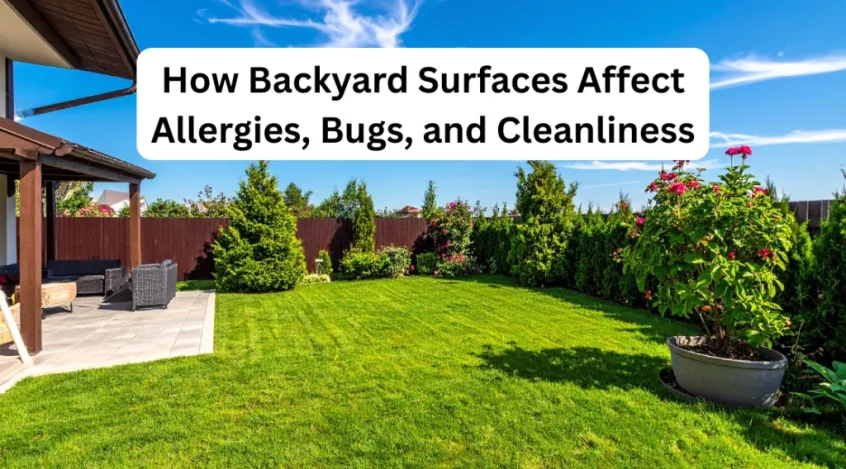
When homeowners think about backyard upgrades, they often focus on appearance or maintenance. But for many families, especially those with kids or pets, another factor becomes just as important: how the surface affects allergies, insects, and overall cleanliness.
The material underfoot can influence more than just how a yard looks — it can shape how comfortable and usable the space feels day to day.
Backyard comfort is closely tied to surface materials, drainage, and maintenance expectations. For a complete overview of how artificial grass performs for families and pets, see our guide to artificial grass safety for kids and pets.
Allergens and Natural Grass
Natural lawns can produce pollen and harbor allergens depending on the type of grass, climate, and maintenance routine. In addition:
-
Mowed grass releases particles into the air
-
Weeds can introduce additional allergens
-
Damp soil can contribute to mold growth
For families sensitive to seasonal allergies, these factors can influence how often and comfortably the yard is used.
Artificial grass does not produce pollen and does not grow weeds in the same way natural lawns do, which can reduce some common allergy triggers.
Bugs and Insects
Backyard insects are part of any outdoor environment, but surface type can influence how inviting a space is to certain pests.
Natural grass and soil can attract:
-
Ants
-
Fleas
-
Ticks
-
Mosquitoes (especially in damp areas)
Standing water and thick vegetation create environments that some insects prefer.
Surfaces that drain efficiently and avoid excessive moisture can reduce conditions that attract pests. While no surface eliminates insects entirely, proper drainage and maintenance can make a noticeable difference.
Mud, Dirt, and Everyday Cleanliness
For many families, cleanliness concerns are less about chemicals and more about practicality.
Natural grass can become:
-
Muddy after rain
-
Worn down in high-traffic areas
-
Patchy or uneven over time
This often leads to dirt being tracked indoors, especially in homes with kids or pets.
Artificial grass is designed to drain water rather than absorb it, which helps prevent muddy conditions. With basic rinsing and occasional cleaning, many homeowners find it easier to maintain a consistently usable yard.
Drainage Plays a Major Role
Regardless of surface type, drainage is one of the most important factors in backyard comfort.
Poor drainage can contribute to:
-
Lingering moisture
-
Odor concerns
-
Increased insect activity
-
Messy conditions
Well-designed outdoor surfaces — whether grass, turf, or hardscape — should prioritize proper water flow to keep the yard functional and clean.
(Optional second link)
You may link “proper drainage” or “fast drainage” to a supporting drainage feature page if desired.
Choosing a Surface That Fits Your Household
There isn’t one perfect backyard material for every family. The right choice depends on:
-
Climate
-
Allergy sensitivity
-
Pet use
-
Maintenance preferences
-
How often the space is used
For many homeowners, reducing allergens, minimizing mud, and simplifying cleanup are key priorities when evaluating lawn alternatives — including artificial grass.
Final Thought
Backyard surfaces influence more than aesthetics. They affect how often a space is used, how clean it stays, and how comfortable families feel spending time outdoors.
Understanding how different materials impact allergens, insects, and maintenance helps homeowners choose a solution that fits their lifestyle — not just their landscaping goals.