


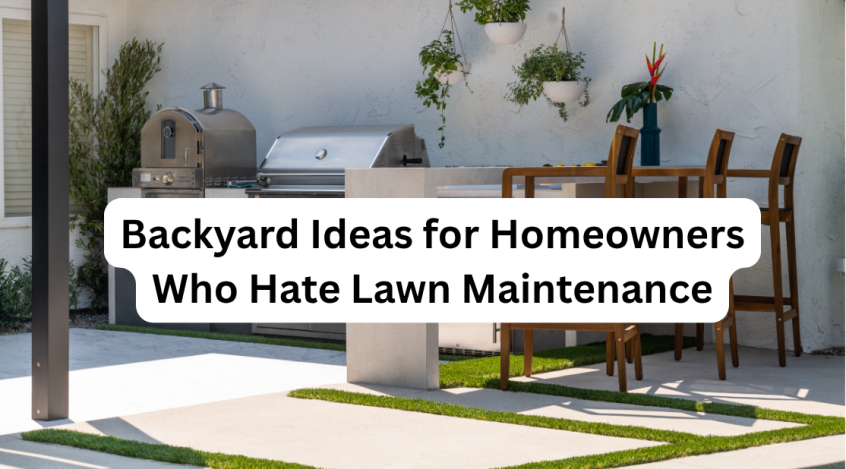
Not every homeowner enjoys spending weekends mowing, watering, fertilizing, and repairing their lawn.
For some people, lawn care is a hobby.
For others, it’s just another item on an already busy to-do list.
If you’re tired of constantly maintaining your yard, you’re not alone. Many homeowners are looking for ways to create an outdoor space that is attractive, functional, and easier to manage year-round.
The good news is that reducing lawn maintenance doesn’t necessarily mean sacrificing your backyard.
Start by Rethinking How You Use the Space
One of the biggest mistakes homeowners make is designing their yard around tradition instead of how they actually live.
Ask yourself: 
- Do you regularly use the entire lawn?
- Do pets use certain areas more than others?
- Is entertaining a priority?
- Do kids need a place to play?
- Are there areas that are mostly decorative?
Understanding how the yard functions can help identify opportunities to reduce maintenance while improving usability.
Create Functional Outdoor Zones
Many modern backyards are designed around dedicated activity spaces rather than large areas of traditional grass.
Examples include:
- Outdoor dining areas
- Fire pit spaces
- Pet zones
- Play areas
- Garden beds
- Seating areas
Breaking the yard into functional zones often reduces maintenance while making the space more enjoyable.
Consider Low-Maintenance Ground Covers
Natural grass isn’t the only option for outdoor surfaces.
Homeowners often explore alternatives such as:
- Mulch
- Decorative rock
- Native landscaping
- Ground cover plants
- Artificial grass
Each option has its own maintenance requirements, appearance, and long-term benefits.
The right choice depends on how the space will be used.
Focus on Reducing High-Maintenance Areas
Not every part of the yard needs the same level of attention. 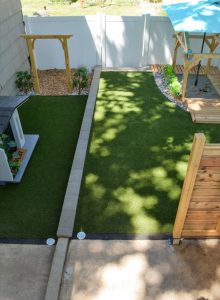
Some homeowners reduce maintenance by replacing the most difficult sections of their lawn, such as:
- Narrow side yards
- Pet areas
- Shaded sections
- High-traffic zones
- Difficult-to-irrigate areas
Targeting problem areas can significantly reduce maintenance without completely redesigning the entire landscape.
Think About Water Usage
For many homeowners, lawn maintenance isn’t just about mowing.
Watering can become one of the most time-consuming and costly aspects of maintaining a yard.
Reducing large areas of natural grass can help decrease:
- Irrigation demands
- Seasonal lawn stress
- Ongoing maintenance requirements
This is one reason many homeowners begin exploring alternative landscaping solutions.
Design for Real Life, Not Perfect Conditions
Many lawn care challenges occur because homeowners are constantly trying to maintain a picture-perfect lawn.
In reality, most families simply want a yard that is:
- Clean
- Usable
- Comfortable
- Attractive
- Easy to maintain
Design decisions that prioritize real-world use often create more satisfying outdoor spaces than designs focused solely on appearance.
Low Maintenance Doesn’t Mean No Maintenance
Every outdoor space requires some level of care.
Even low-maintenance solutions may involve:
- Occasional cleaning
- Seasonal upkeep
- Landscape maintenance
- General yard care
The goal isn’t to eliminate maintenance completely.
The goal is to reduce the amount of time and effort required to keep the yard looking and functioning the way you want.
The Best Backyard Is the One You’ll Actually Use
Homeowners often spend years maintaining yards they rarely enjoy.
\
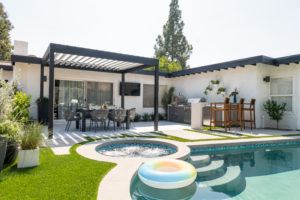
A better approach is to create a space that fits your lifestyle.
Whether that means:
- Less grass
- More gathering space
- Easier maintenance
- Better pet usability
- More room for family activities
The most successful backyard designs are the ones that support how homeowners actually live.
A Smarter Way to Evaluate Backyard Improvements
Before investing in any landscaping project, it helps to ask:
“Will this make my yard easier to enjoy?”
That question often leads to better decisions than focusing only on appearance.
If you’re considering alternatives to traditional grass, our guide to how to choose the right artificial grass explains how homeowners evaluate durability, maintenance, usability, and long-term performance.
Final Thought
Many homeowners don’t dislike their yard—they dislike the amount of work required to maintain it.
By focusing on usability, reducing high-maintenance areas, and choosing solutions that fit your lifestyle, it’s possible to create an outdoor space that requires less work while providing more enjoyment.