


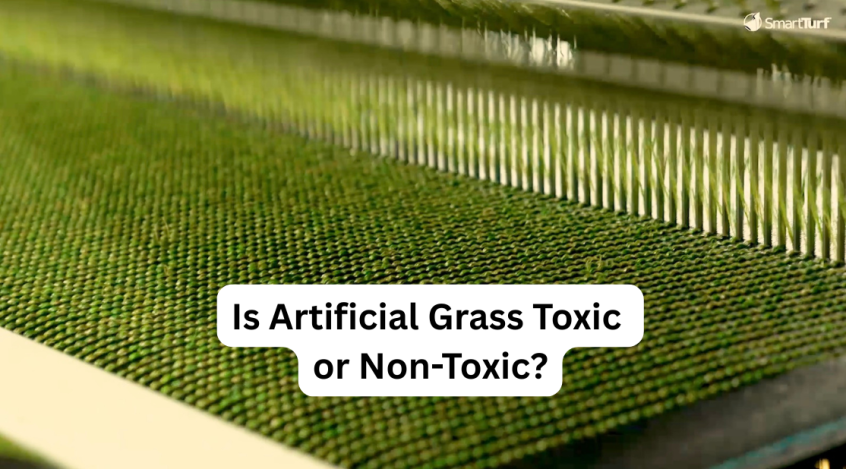
When homeowners research artificial grass, one of the most common questions they ask is whether it’s toxic. Because artificial turf is made from synthetic materials, it’s natural to wonder what it contains and whether it’s safe for regular contact.
The short answer is that high-quality artificial grass designed for residential use is non-toxic and safe for everyday family use when installed properly. Understanding what that means — and what causes confusion — helps clarify the topic.
Toxicity concerns are part of a broader conversation about materials, drainage, and long-term use. For a complete overview of artificial grass safety for families and pets, see our guide to artificial grass safety for kids and pets.
What Is Artificial Grass Made Of?
Residential artificial grass is typically made from: 
-
Polyethylene or polypropylene fibers
-
A backing layer for structural support
-
Infill materials appropriate for residential use
These materials are manufactured to be durable, stable, and safe for regular outdoor contact. Reputable residential turf products are lead-free and designed without toxic additives.
Why Do Toxicity Concerns Exist?
Most toxicity concerns about artificial grass stem from one of two sources:
-
Older products or outdated manufacturing standards
-
Confusion with crumb rubber infill used on sports fields
Crumb rubber — made from recycled tires — has been used primarily on athletic fields, not in residential landscapes. Modern residential artificial grass systems use pet- and family-safe infill options and do not rely on crumb rubber.
Understanding this distinction helps separate residential installations from commercial sports applications.
Does Artificial Grass Contain Harmful Chemicals?
High-quality residential artificial grass does not require:
-
Fertilizers
-
Herbicides
-
Pesticides
Unlike natural lawns, which often rely on chemical treatments to maintain appearance, artificial grass maintains its look without those ongoing inputs.
This reduction in lawn chemical use is one reason many families consider artificial grass in the first place.
What About Off-Gassing or Odors?
Some homeowners worry about synthetic materials releasing odors or gases. Modern residential artificial grass products are designed for outdoor environments and are manufactured to meet safety standards appropriate for regular contact.
In most cases, any minor installation-related odor dissipates quickly after placement, particularly in open-air residential settings.
Drainage and Cleanliness Matter More Than Toxicity
For families with kids and pets, practical concerns often center on cleanliness rather than chemical exposure.
Properly designed turf systems:
-
Drain efficiently
-
Reduce standing moisture
-
Are easy to rinse and maintain
Cleanliness, installation quality, and routine care typically play a bigger role in long-term comfort than the material composition itself.
Final Thought
Artificial grass designed for residential use is non-toxic and safe for everyday family contact when selected thoughtfully and installed correctly. Many concerns arise from confusion between residential turf and older commercial systems.
When homeowners understand what modern artificial grass is made of — and how it differs from sports-field installations — the toxicity question becomes much clearer.
Frequently Asked Questions
Is artificial grass safe to touch?
Yes. Residential artificial grass is designed for regular outdoor contact and is safe for children and pets when used as intended.
Does artificial grass contain lead?
Reputable residential artificial grass products are lead-free and manufactured to meet current safety standards.
Is artificial grass safer than natural grass?
Artificial grass eliminates the need for fertilizers and pesticides. Each homeowner should weigh the benefits and tradeoffs based on their priorities.
Does artificial grass release harmful chemicals in heat?
Modern residential turf products are designed for outdoor use. Any minor installation odors typically dissipate quickly after installation in open-air environments.