


When homeowners say artificial turf “feels fake,” they’re usually not talking about one specific thing. It’s often a mix of appearance, texture, past experiences, and expectations about how a backyard should look and function.
The word “fake” tends to reflect uncertainty more than a clear objection.
For homeowners evaluating whether artificial grass is the right fit for their family, understanding how modern residential systems differ from older turf is important. You can learn more in our guide to artificial grass safety for kids and pets.
Past Experiences Shape Perception
Many people formed their opinions about artificial grass years ago. Early versions of turf often looked flat, overly shiny, or stiff underfoot. Sports fields and commercial installations also influenced how people visualize artificial grass — and those environments are very different from residential backyards.
If someone’s only exposure was an older installation, “fake” may simply mean outdated.
Texture and Underfoot Feel
Natural grass has variation — some blades are soft, some are coarse, and the ground beneath changes with weather. Artificial grass is more consistent by design.
To some homeowners, that consistency feels unfamiliar at first. For others, it feels reassuring because the surface doesn’t turn muddy, uneven, or patchy over time.
Often, “fake” just means “different from what I’m used to.”
Visual Expectations
Homeowners also associate grass with seasonal change — growth, trimming, wear patterns. Artificial grass stays visually consistent year-round. 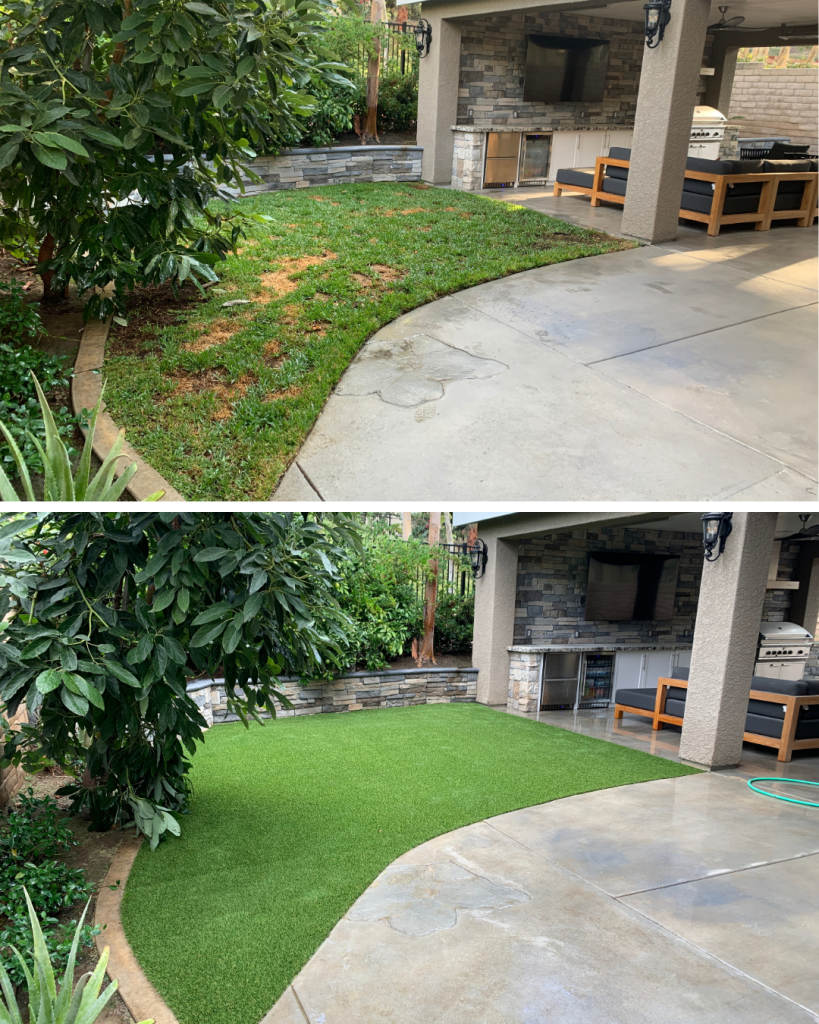
That predictability can be a benefit, but it can also feel unusual if someone expects lawns to look slightly imperfect or vary with the seasons.
Modern residential turf systems are designed with varied blade shapes and tones to look more natural than earlier products, but perception often lags behind innovation.
Concerns About Comfort
Sometimes when someone says turf feels fake, they’re really asking:
-
Will it be comfortable to sit or lie on?
-
Will it get too hot?
-
Will it feel hard underfoot?
These are practical questions about usability, not just aesthetics. When homeowners understand how installation, base preparation, and drainage affect comfort, concerns often shift from emotional to practical.
The Difference Between Commercial and Residential Turf
It’s also important to distinguish between commercial sports turf and residential artificial grass. Materials, infill, and performance expectations can vary depending on the application.
Many of the assumptions people carry about turf come from seeing it in stadiums or playgrounds — not in family backyards designed for everyday living.
What “Fake” Often Really Means
In most conversations, “fake” reflects one of three things:
-
Lack of familiarity
-
Outdated examples
-
Concern about comfort or safety
Once homeowners see modern residential installations in person, their definition of “fake” often changes.
Final Thought
Calling turf “fake” is usually less about rejecting it and more about wanting reassurance. When homeowners understand how artificial grass is designed, installed, and maintained in residential settings, the conversation often shifts from perception to practicality.