

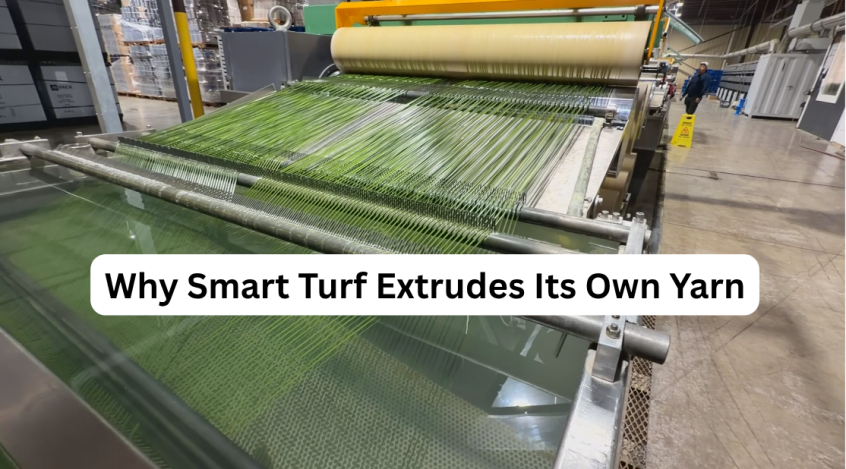
Artificial grass quality begins long before the yarn is tufted into a backing or installed in a yard. It begins with the material used to create each individual turf blade.
That is why Smart Turf extrudes its own artificial grass yarn instead of simply purchasing finished yarn from another supplier.
By controlling this early stage of manufacturing, Smart Turf has greater oversight of blade shape, color formulation, UV protection, consistency, and the overall characteristics of the finished turf.
For a complete look at the production process, start with our guide explaining how artificial grass is made.
Key Takeaways
- Artificial grass yarn becomes the visible blades of the finished turf.
- Smart Turf extrudes its own yarn in the USA.
- In-house yarn extrusion provides greater control over blade shape, color, UV inhibitors, and consistency.
- Yarn quality affects appearance, resilience, softness, and long-term outdoor performance.
- Face weight alone cannot tell homeowners how well the yarn was engineered.
What Is Artificial Grass Yarn?
Artificial grass yarn is the material used to create the blades and thatch visible on the surface of synthetic turf.
During extrusion, raw materials are heated, blended, shaped, cooled, and formed into continuous strands. Those strands are later prepared and tufted into the turf backing.
The extrusion process can influence important product characteristics, including:
- Blade shape
- Blade thickness
- Color and color consistency
- Surface luster
- Softness
- Resilience
- UV resistance
- Suitability for different applications
Because the yarn becomes the visible and touchable part of the finished product, its design plays a major role in how artificial grass looks and performs.
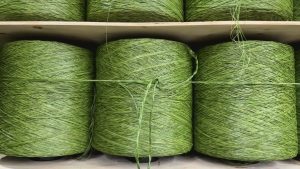
Why Smart Turf Produces Its Own Yarn
Smart Turf extrudes its own yarn to maintain greater control over one of the most important parts of the turf manufacturing process.
When a company purchases finished yarn from an outside supplier, it depends on that supplier’s available formulations, colors, blade profiles, production schedules, and quality standards.
Producing yarn in-house gives Smart Turf greater visibility into how the blades are engineered before they move into tufting, coating, and finished-roll production.
Greater Control Over Blade Shape
Artificial grass blades are not all shaped the same way. Blade profiles can be engineered to influence appearance, softness, strength, resilience, and how the fibers reflect light.
A blade that reflects too much light may look shiny or artificial. A blade that is not appropriate for the application may flatten faster or feel different underfoot.
By extruding its own yarn, Smart Turf can develop blade characteristics that support the intended use of the finished product, whether the turf is designed for a residential lawn, pet area, playground, athletic space, or putting green.
Color Begins During Yarn Production
The natural appearance of artificial grass depends on more than choosing a single shade of green. Finished products may combine multiple greens with tan or brown thatch to create depth and realism.
Color is introduced during yarn manufacturing, so consistency at this stage is important. Even small differences in color or luster can become noticeable when turf is installed across a large yard.
In-house extrusion gives Smart Turf greater control over color formulation and consistency before the yarn is tufted into finished rolls.
UV Inhibitors Are Added During Manufacturing
Artificial grass is exposed to sunlight every day, making UV protection an important part of yarn engineering.
Smart Turf incorporates UV inhibitors into the material during manufacturing. These additives help the turf blades resist damage and color degradation caused by prolonged exposure to sunlight.
UV inhibitors do not make artificial grass completely unaffected by every outdoor condition, but they are an important part of designing turf for long-term exterior use.
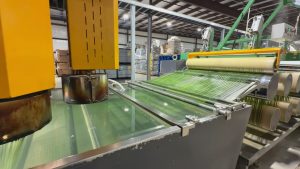
Yarn Engineering Affects Resilience
Resilience refers to how well turf blades recover after being walked on, played on, or exposed to regular use.
The performance of the finished surface depends on several factors, including yarn design, blade profile, pile height, density, infill, installation, and maintenance.
Yarn extrusion is one of the first opportunities to engineer the characteristics that influence how the blades behave after tufting.
Yarn Quality Cannot Be Measured by Face Weight Alone
Face weight measures how much yarn is present in one square yard of artificial grass. It does not explain how that yarn was formulated, shaped, colored, or protected from UV exposure.
Two turf products can have similar face weights while using very different blade designs and yarn constructions.
That is why homeowners should evaluate face weight as only one part of the product. Read our guide to artificial grass face weight to learn why a higher number does not automatically mean better turf.
Built-In Microban Protection Begins in the Blade
Smart Turf is the exclusive artificial grass partner of Microban.
In applicable Smart Turf products, Microban antimicrobial protection is incorporated directly into the turf blade during manufacturing. It is not sprayed onto the finished surface afterward.
Because the technology is built into the blade, it helps inhibit the growth of bacteria, mold, and mildew while supporting odor control for the life of the product.
This is another example of why yarn manufacturing matters. Important product features can begin inside the blade itself, where they cannot be evaluated by appearance or face weight alone.
Consistency From Yarn to Finished Turf
Smart Turf’s manufacturing process continues beyond extrusion. After the yarn is produced, it is tufted, coated, and inspected as part of the finished turf system.
Controlling multiple stages of production creates a clearer connection between product design and the roll that reaches the customer.
It also allows Smart Turf to provide more direct information about how its products are made and which turf is appropriate for a specific project.
Why In-House Yarn Extrusion Matters to Homeowners
Most homeowners will never purchase yarn separately or see the extrusion process in person. However, the decisions made during yarn production affect the finished lawn they see and use every day.
In-house yarn extrusion can support:
- More intentional blade design
- Greater color and luster consistency
- UV protection built into the material
- Product development for specific applications
- Closer manufacturing oversight
- Clearer product knowledge and technical support
It gives homeowners another meaningful question to ask when comparing turf: does the company selling the product understand and control how the blades were actually made?
Questions to Ask About Artificial Grass Yarn
- Who manufactured the yarn?
- Where was it extruded?
- Does the yarn contain UV inhibitors?
- How was the blade shape selected?
- Is the yarn designed for the intended application?
- Does the blade include built-in antimicrobial protection?
- Who can answer technical questions about the product?
Why Manufacturing in the USA Matters
Smart Turf manufactures artificial grass in the United States, including its own yarn extrusion and tufting.
Domestic manufacturing provides closer oversight of production, product consistency, availability, and technical support. It also creates a more direct connection between the manufacturer and the homeowners, contractors, and dealers using the product.
Learn more about the Smart Turf Made in USA Advantage and our guide comparing Made in USA and imported artificial grass.
Final Thoughts
Artificial grass yarn is not simply a raw material. It becomes the blades that determine how the finished turf looks, feels, and responds to years of outdoor use.
By extruding its own yarn, Smart Turf maintains greater control over blade design, color, UV protection, consistency, and built-in technologies such as Microban.
When comparing artificial grass, look beyond color samples and face weight. Ask who made the yarn, how the blade was engineered, and whether the manufacturer controls the process behind the finished product.
Explore the Smart Turf product catalog or continue learning with our guide to how artificial grass is made.
Frequently Asked Questions
What is artificial grass yarn made from?
Artificial grass yarn is typically manufactured from synthetic materials that are engineered and extruded into turf blades. The specific formulation and blade design depend on the product and its intended application.
Why does blade shape matter?
Blade shape can influence appearance, softness, resilience, light reflection, and how the turf responds to regular use.
Does Smart Turf manufacture its own yarn?
Yes. Smart Turf extrudes its own artificial grass yarn in the United States before tufting it into finished turf products.
Do Smart Turf blades contain UV protection?
Yes. Smart Turf incorporates UV inhibitors during manufacturing to help the turf blades resist damage and color degradation from outdoor sunlight exposure.
Is Microban sprayed onto Smart Turf?
No. In applicable Smart Turf products, Microban antimicrobial protection is incorporated directly into the turf blade during manufacturing rather than being sprayed onto the finished surface.