

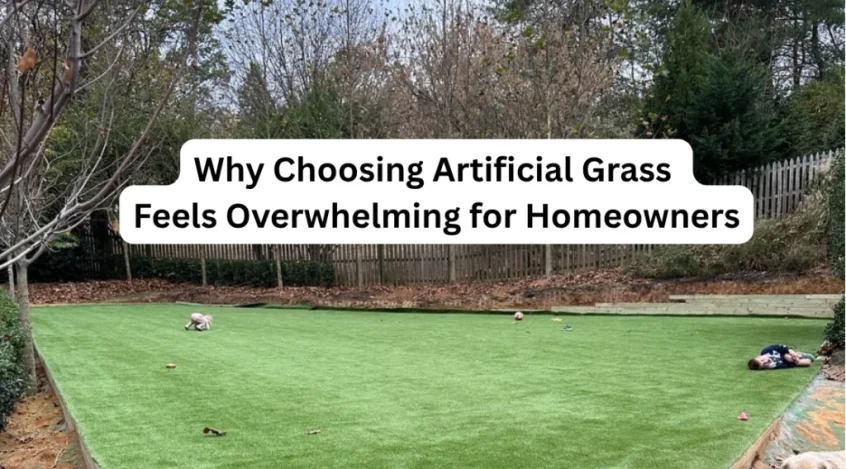
If you’ve started researching artificial grass, you’ve probably noticed something quickly:
There’s a lot of information — and not all of it is easy to compare.
Different products, different materials, different price points, and a wide range of opinions can make the decision feel more complicated than expected.
If it feels overwhelming, that’s normal. Most homeowners aren’t familiar with how artificial grass systems work, which makes it harder to know what actually matters.
There Isn’t Just One Type of Artificial Grass
One of the biggest reasons the process feels confusing is that artificial grass isn’t a single product.
It varies based on:
- Intended use (pets, kids, landscaping)
- Material composition
- Drainage design
- Durability and structure
Without a clear starting point, it’s easy to compare products that aren’t designed for the same purpose.
Marketing Language Doesn’t Always Help
Terms like:
- “Premium”
- “Realistic”
- “High-performance”
Are often used across different products — even when those products perform very differently.
This can make it difficult to understand what you’re actually getting and what those terms mean in real-world use.
It’s Hard to See What’s Underneath
Artificial grass isn’t just about what you see on the surface. 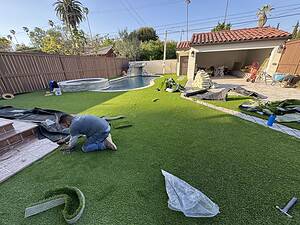
A large part of how it performs depends on:
- Base preparation
- Compaction
- Drainage
These aren’t always visible in photos or product descriptions, which makes them easy to overlook — even though they play a major role in long-term performance.
Conflicting Advice Creates Uncertainty
As homeowners research, they often come across mixed opinions:
- Some say artificial grass requires no maintenance
- Others say it can smell or wear out quickly
- Some focus on appearance, others on performance
Without context, it’s hard to know which information applies to your situation.
It’s Not Always Clear What Actually Matters
Most homeowners aren’t trying to become experts in artificial grass — they just want to make a good decision.
The challenge is figuring out:
- Which features are essential
- Which differences actually matter
- What will impact long-term satisfaction
Without a clear framework, everything can start to feel equally important — even when it’s not.
Why It Starts to Feel Simpler
The decision becomes much easier once you shift the focus from: 
👉 “Which product is best?”
to
👉 “What does my yard actually need?”
When you look at:
- How the space will be used
- What conditions exist in your yard
- What level of maintenance you’re comfortable with
The options start to narrow quickly.
Where to Start
If you’re feeling stuck, the most helpful next step is to focus on the fundamentals that actually affect performance.
A good place to begin is understanding how use, installation, drainage, and durability all work together — which is exactly what we break down in our guide to how to choose the right artificial grass.
Final Thought
Choosing artificial grass can feel overwhelming at first — not because it’s complicated, but because there’s a lot of information without a clear structure.
Once you focus on how your yard will be used and what actually impacts performance, the decision becomes much more manageable.