

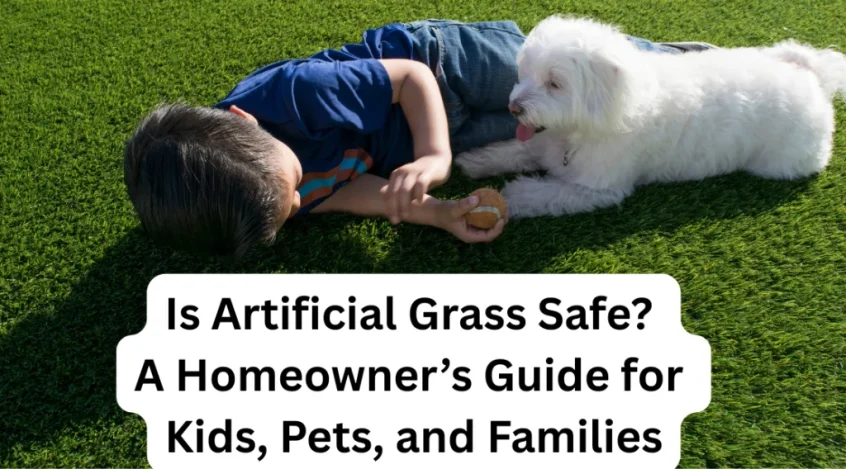
Artificial grass has become a popular alternative to traditional lawns, especially for homeowners looking to reduce maintenance and improve how their outdoor spaces are used. Still, one question comes up more than any other before people make the switch:
Is artificial grass safe for kids, pets, and families?
The short answer is yes — when it’s designed for residential use and installed correctly. But safety depends on more than appearance alone. This guide explains what artificial grass is made of, how it compares to natural grass, and what homeowners should know when evaluating safety for their household.
Artificial Grass Safety: Quick Summary
High-quality artificial grass designed for residential use is safe for kids and pets. It is non-toxic, requires no pesticides or fertilizers, drains efficiently, and provides a consistent, clean surface when installed as a complete system.
What Makes Artificial Grass Safe?
Artificial grass safety is determined by materials, system design, and installation, not just the turf fibers themselves.
Modern residential turf systems are typically: 
-
Non-toxic and lead-free
-
Free from pesticides, herbicides, and fertilizers
-
Designed for proper drainage
-
Stable and even underfoot
When these elements work together, artificial grass creates a predictable and controlled outdoor surface.
Is Artificial Grass Safe for Kids?
Yes. Artificial grass is widely used in residential yards, playgrounds, and recreational areas because it provides a consistent play surface.
For families with children, key safety benefits include:
-
No exposure to lawn chemicals
-
Fewer muddy or uneven areas
-
A surface that looks and performs the same year-round
Many parents appreciate that artificial grass removes variables like fertilizer residue, weeds, and bare patches that often develop with natural lawns.
Is Artificial Grass Safe for Pets?
Artificial grass designed for pets is built to handle frequent use, bathroom activity, and daily wear.
Pet-friendly turf systems focus on:
-
Efficient drainage
-
Easy cleaning and rinsing
-
Materials that are safe for paws and play
When properly maintained, pet turf can be cleaner and more predictable than natural grass, which often requires chemical treatments.
? Read more here: Is Artificial Grass Safe for Dogs?
Is Artificial Grass Toxic or Non-Toxic?
One of the most common safety concerns homeowners raise is toxicity.
High-quality artificial grass intended for residential use is:
-
Made without toxic chemicals
-
Lead-free
-
Safe for regular contact
Unlike natural grass, artificial turf does not require weed killers, fertilizers, or pesticides — reducing chemical exposure around the home.
Does Artificial Grass Cause Cancer? Understanding the Crumb Rubber Concern
Some safety concerns around artificial grass — including cancer-related claims — come from confusion about crumb rubber infill, not the turf itself.
Crumb rubber is made from recycled tires and has historically been used as infill in sports fields and playgrounds, not residential landscapes. Certain studies and media reports have questioned the long-term exposure risks of crumb rubber in those specific environments.
It’s important to clarify that crumb rubber is not used in modern residential artificial grass installations and should not be.
What Homeowners Should Know
-
Crumb rubber is primarily associated with athletic fields, not residential yards
-
Residential artificial grass systems use pet- and family-safe infill materials
-
Safety concerns linked to crumb rubber do not apply to properly designed residential turf systems
Modern residential artificial grass is designed to be:
-
Non-toxic
-
Lead-free
-
Free from recycled tire materials
-
Safe for routine contact by kids and pets
When homeowners hear concerns about artificial grass and cancer risk, it’s almost always referencing a different product category used in different settings.
Understanding this distinction helps separate outdated or misapplied concerns from how residential turf is actually designed and used today.
Artificial Grass vs Natural Grass: Which Is Safer?
Natural grass feels familiar, but it often comes with hidden safety tradeoffs.
Key differences homeowners consider: 
-
Artificial grass: No lawn chemicals, fewer allergens, no mud
-
Natural grass: Fertilizers, pesticides, allergens, insects
For many families, artificial grass offers a more controlled and lower-maintenance environment.
? See a full comparison in: Artificial Grass vs Natural Grass
Does Artificial Grass Harbor Bacteria or Mold?
Like any outdoor surface, artificial grass can collect dirt and debris if it’s neglected. However, properly designed turf systems are built to drain water efficiently, which helps reduce many common cleanliness concerns.
Good drainage:
-
Prevents moisture from pooling
-
Reduces the conditions bacteria and mold prefer
-
Makes routine cleaning simple
With basic rinsing and regular care, most homeowners find artificial grass easy to keep clean.
Some residential turf systems also integrate antimicrobial technology, such as Microban®, into the turf backing or fibers. This type of protection is designed to help inhibit the growth of bacteria on the surface of the turf over time.
It’s important to note that antimicrobial protection does not replace proper drainage or routine cleaning, but it can provide an additional layer of support in maintaining a cleaner outdoor surface.
Common Safety Myths About Artificial Grass
Several myths continue to worry homeowners.
-
Myth: Artificial grass is toxic
Reality: Residential turf is designed to be non-toxic and safe. -
Myth: It’s unsafe for kids or pets
Reality: Safety depends on system quality and installation. -
Myth: Artificial grass is harder to maintain than real grass
Reality: Many homeowners find it easier to keep clean.
Understanding how modern turf systems work helps separate outdated assumptions from current reality.
What Homeowners Should Look for in a Safe Turf System
If safety is a priority, homeowners should focus on:
-
Turf designed for residential use

-
Proper drainage design
-
Professional installation
-
Clear maintenance expectations
Artificial grass works best when it’s treated as a complete system — not just a surface replacement.
Final Takeaway
Artificial grass is a safe, practical option for many families when it’s chosen thoughtfully and installed correctly. By eliminating chemical lawn treatments and creating a clean, consistent surface, artificial grass often aligns well with what homeowners want for kids, pets, and everyday outdoor use.
Frequently Asked Questions About Artificial Grass Safety
Is artificial grass safe for children to play on?
Yes. High-quality artificial grass designed for residential use is safe for children. It provides a consistent surface and does not require pesticides or fertilizers commonly used on natural lawns.
Is artificial grass safe for dogs and other pets?
Yes. Pet-friendly artificial grass systems are designed to handle frequent use, drain efficiently, and be easy to clean. When properly installed and maintained, they are safe for pets.
Is artificial grass toxic or made with harmful chemicals?
Reputable artificial grass products intended for homes are non-toxic and lead-free. Unlike natural grass, artificial turf does not require chemical treatments to stay green.
Does artificial grass harbor bacteria or mold?
Artificial grass does not naturally harbor bacteria or mold. Proper drainage and routine rinsing help prevent moisture buildup, which reduces the conditions bacteria and mold prefer.
Is artificial grass safer than natural grass?
In many cases, yes. Artificial grass eliminates the need for lawn chemicals and reduces allergens, mud, and pests that are common with natural grass.
Does artificial grass cause cancer or contain crumb rubber?
Concerns about artificial grass and cancer are typically related to crumb rubber infill, which is made from recycled tires and has historically been used on athletic fields and playgrounds. Crumb rubber is not used in modern residential artificial grass installations and should not be.
Residential artificial grass systems are designed with non-toxic, lead-free materials and pet- and family-safe infill options. When homeowners hear cancer-related claims, they are almost always referencing products used in different settings — not properly designed residential turf.
What makes an artificial grass system safe?
Safety depends on the full system — including turf materials, drainage design, base preparation, and proper installation — not just the grass fibers alone.